Prepare a non-anonymous PDF
Submissions must be a non-anonymous PDF, formatted with the CEURART template (as in the ITASEC 2027 Call for Papers (opens in a new tab)).
Workshop at ITASEC & SERICS 2027 (opens in a new tab)
On 17 September 2026, the European Commission released its proposal for the KIDS Act, which seeks to protect children from risky digital services and AI systems within a coherent regulatory and enforcement framework. Translating such legal requirements into effective, technically feasible solutions calls for sustained dialogue between legal and technical experts.
This workshop brings together researchers and practitioners from the cybersecurity community, across different disciplines, to examine how to ensure children’s security and safety while upholding their right to participation and agency in the digital world.
The workshop aims to foster interest in the topic and promote new interdisciplinary collaborations towards a digital environment that children can navigate safely. Therefore, we invite the cybersecurity community, from all backgrounds, to join the first workshop on children’s rights in the digital world at ITASEC & SERICS 2027.
To foster constructive debate, the workshop welcomes abstracts, position papers, short papers and reports on previously published results. Particular emphasis will be placed on interdisciplinary work that connects different perspectives and stimulates dialogue across disciplines, as well as on work that identifies concrete research challenges at the intersection of technology, law, security and children’s rights.
Topics of interest include, but are not limited to:
Please note that accepted papers will NOT be included in the Proceedings.
Afternoon · ITASEC & SERICS 2027, Siena
Submissions must be a non-anonymous PDF, formatted with the CEURART template (as in the ITASEC 2027 Call for Papers (opens in a new tab)).
E-mail your submission to Nadia Spatari (nadia.spatari@imtlucca.it), using the following as the e-mail subject:
CHILDIGIT workshop_Submission_Surname, Name
Accepted types of submission include:
500words max.
To suggest insights or discussion prompts.
Excluding bibliography
3pages max.
Excluding bibliography
3pages max.
Such as work in progress or case studies.
Excluding bibliography
16pages max.
Relevant to the topics of interest.
Excluding bibliography
Participants will be selected according to contribution quality, relevance and diversity. Accepted submissions will be featured on the workshop website, and at least one author of each accepted contribution must register to the workshop and present the work submitted.
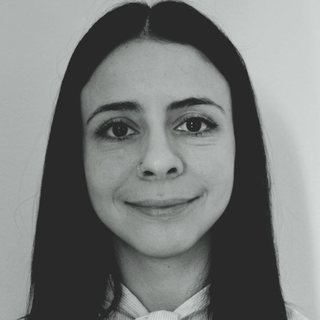
Ph.D. Candidate in Cybersecurity
University of Bari “Aldo Moro” & IMT School for Advanced Studies Lucca
Sara Tibidò is a third-year Ph.D. candidate in “Cybersecurity” at the University of Bari “Aldo Moro” and IMT School for Advanced Studies Lucca, Italy. She holds a double Master’s Degree in Human Rights and International Relations from both the University of Padova (Italy) and the University of Wrocław (Poland). She has been a tutor of the “Children’s Rights” course, held within the Master’s Degree in “Human Rights and Multilevel Governance” (University of Padova). Her research focuses on trustworthy AI, child-centered AI, and regulatory compliance of AI systems for children. She has been attending various international conferences in the areas of child-centered design and digital technologies for social good, such as the International Conference on Evaluation and Assessment in Software Engineering (EASE), ACM Interaction Design and Children Conference (IDC) and the ACM International Conference on Information Technology for Social Good (GoodIT).
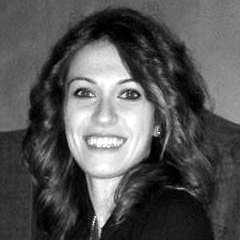
Ph.D. Candidate in Cybersecurity
IMT School for Advanced Studies Lucca
Nadia Spatari is a PhD candidate in Cybersecurity at the IMT School for Advanced Studies Lucca. Her doctoral research focuses on AI Regulatory Sandboxes, with particular attention to safeguarding AI-based systems and software used by minors, and to governance frameworks supporting the implementation of the EU AI Act, at the intersection of cybersecurity, AI governance, and children’s digital rights. She has authored and co-authored several scientific contributions in these areas.

Associate Professor in Secure Software Engineering
University of Bari “Aldo Moro”
Azzurra Ragone is an Associate Professor in Secure Software Engineering at the Computer Science Department at the University of Bari “Aldo Moro”, Italy. Her research focuses on responsible and trustworthy AI engineering, including practitioners’ needs, human and children’s rights in AI systems, and rights-based frameworks and metrics. She also works on LLM-based software engineering, from automated test generation to requirements specification. She has published more than 100 papers at international venues and journals. She supervises Ph.D. students of the national Ph.D. in Cybersecurity coordinated by IMT Lucca.
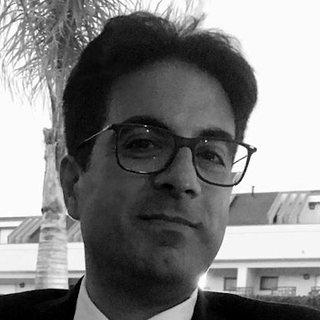
Associate Professor of Computer Engineering
DIMES, University of Calabria
Angelo Furfaro is Associate Professor of Computer Engineering (INF-05/A) at DIMES, University of Calabria, Italy, and Scientific Director of the university’s CyberSecurity Laboratory. With over 20 years of research experience and more than 130 international publications, his current work focuses on agentic architectures and Retrieval-Augmented Generation (RAG) applied to cybersecurity. He has contributed to the design of multi-agent systems for the real-time classification, explanation, and reporting of cyberattacks, achieving high accuracy in detecting common web application threats, as well as agentic frameworks that combine large language models with automated validation tools to generate and verify security compliance rules for IT infrastructures. His research also extends to the automated design of cyber training environments from natural-language specifications, and to the study of large language model agents both as emerging attack vectors and as tools for strengthening system-level security.
He is Editor-in-Chief of Simulation Modelling Practice and Theory (Elsevier) and currently leads national doctoral research projects on agentic RAG technologies for infrastructure security and on privacy-preserving network defense in the post-quantum era, funded by Italy’s National Cybersecurity Agency. He is a Senior Member of ACM and IEEE. He supervises PhD students in Cybersecurity at the University of Calabria and IMT Lucca, and serves on program committees for major international security and AI conferences.
The detailed program will be announced soon. Accepted contributions will be featured on this page.